


This week on The Night Index, we're diving into what I consider one of the most important games in the horror genre, the one that everyone knows, Outlast.
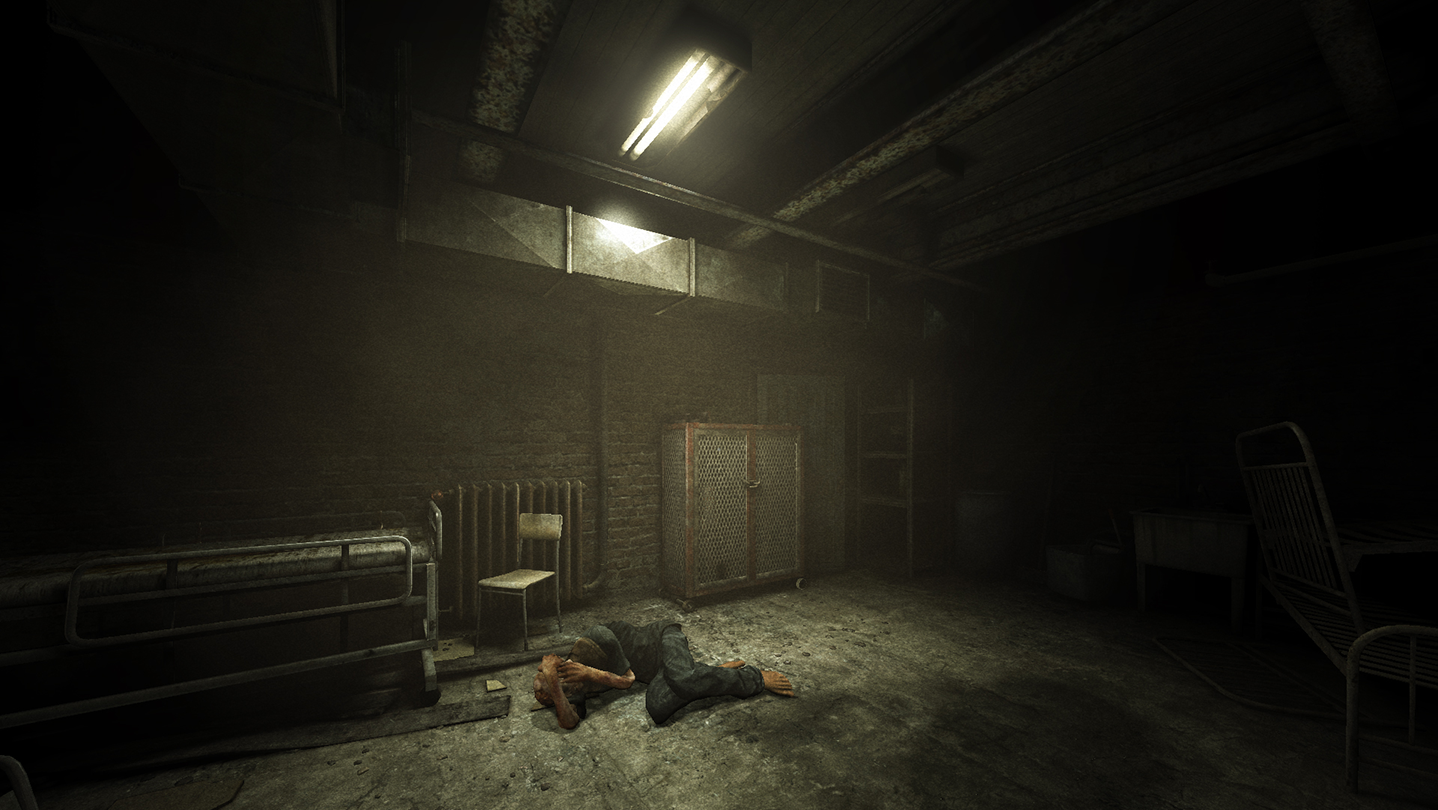
Outlast is long past its prime since its release in 2013, but it still manages to keep an active, although fairly small, community, especially among speedrunners and modders. But let’s take it from the beginning.
At the time of its release, Outlast was very positively received. It had the quality of a triple-A game while being an indie title.
What Outlast Actually Is
For those who haven't played it, a quick setup. You are Miles Upshur, an investigative journalist who receives a tip about unethical experiments happening inside Mount Massive Asylum, a remote psychiatric facility run by the shady Murkoff Corporation. You show up at night with nothing but a camcorder, a notepad, and what I can only describe as catastrophically poor judgment.

Within minutes of stepping inside, you realize the facility has descended into complete chaos. Patients have taken over. Staff is dead. And something has gone very, very wrong in the lower levels. You have no weapons. You cannot fight back. All you can do is run, hide, and keep that battery from dying.
That's the game. And it's terrifying.
The Launch And How the World Received It
When Outlast dropped in September 2013, the reaction was immediate. Critics praised it heavily, with a Metacritic score that put it well above most horror games of the era. But the bigger story wasn't reviews. It was YouTube.
Let's players absolutely lost their minds over it. PewDiePie, who was at the absolute peak of his influence at the time, played it on stream, and the reaction was everywhere. Clip after clip of people screaming, throwing controllers, sprinting through corridors in complete panic. That kind of organic content was the best marketing Red Barrels could have asked for, and they didn't pay a cent for it.
The game spread by word of mouth because it was genuinely scary in a way that translated perfectly to a screaming-at-a-camera format. Within weeks of release, everyone was talking about it. For an indie game with a small team and a limited budget, that kind of reach was almost unheard of.
How Outlast Beat the Big Boys
Here's the part that still amazes me when I think about it. In 2013, the AAA horror landscape was in a rough spot.
Resident Evil 6 had released in 2012 to deeply mixed reviews. The series had drifted so far into action territory that it barely felt like horror anymore. Dead Space 3 followed in early 2013 and did the same thing, adding co-op, toning down the tension, leaning into the shooter elements. Both games came from massive studios with enormous budgets and years of development. Both felt like they were chasing something other than fear.
Then Red Barrels, a team of seven people, put out Outlast for ten dollars. No weapons, no combat, just pure, unrelenting dread. It didn't hedge its bets and it didn't add action to appeal to a broader audience. It committed completely to being a horror game, and that commitment is exactly what made it work so well. While the big studios were flinching, a small indie team looked at the genre and asked what would actually be scary. The answer they came up with was simple: helplessness.
The Horror and the Dread

The no-combat design is the smartest decision in the game. When you can fight back, even a little, the fear deflates. You stop being prey. Outlast never lets you forget that you are prey.
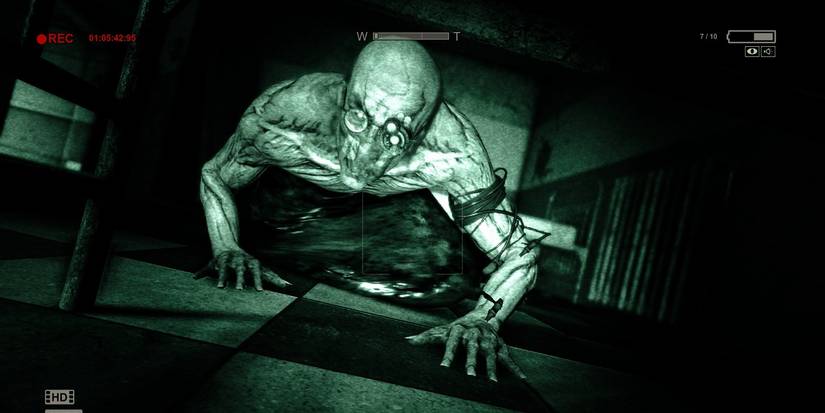
The camcorder is a genius mechanic. In the dark sections of the asylum, which is most of the game, you need to switch to night vision mode to see anything. Night vision drains your battery. Finding batteries becomes a quiet, constant anxiety running underneath everything else. It's a simple system, but it keeps you in a state of low-level stress even in the moments between chases.
And then there are the chases themselves. The first encounter with Dr. Trager is one of the most effective horror sequences I've experienced in any game. He's calm. He's talking to you like a doctor making rounds. And then the moment you move he is behind you and you are running and the camera is shaking and the battery icon is blinking and you have no idea where you're going. It's chaos, and it works every time.
The sewer sequence later in the game is another highlight. Waist-deep water, low visibility, and something moving in it with you. Simple setup. Absolutely suffocating execution.
What the game understands, really understands, is that what you imagine in the dark is always worse than what the game could show you. It uses that. Constantly.
The Found Footage Feeling & Lore
Something that doesn't get talked about enough is how much the camcorder lens changes the experience. You're not just a player controlling a character, you're watching footage. Everything has that slight grainy quality, that rectangular frame, that shaky handheld movement. It feels like something you'd find on a hard drive rather than a game you're playing.
Miles even writes notes in his pad as you progress through the asylum. Observations, reactions, documentation. He's doing his job even as everything falls apart around him. And if you take the time to read those notes, you can see the effect Miles’ environment has on him. They slowly become more deranged, frantic, and unintelligible. That journalistic framing gives the horror a documentary texture that makes the whole thing feel uncomfortably real. Found footage horror was everywhere in film at the time, and Outlast translated that feeling into a game better than anything before or since.
On the surface, Outlast looks like a simple survival horror game about an asylum gone wrong. But if you stop and read the documents scattered throughout Mount Massive, a much larger and more disturbing picture emerges.
Murkoff Corporation isn't just a shady company running experiments. The scattered notes, internal memos, and patient files paint a portrait of a deeply organized, deeply sinister corporate operation that has been running projects like this for a long time, across multiple facilities. The Walrider, the entity you encounter in the game, is not simply a monster. It's the product of decades of research into the morphogenic engine, sleep deprivation experiments, and the weaponization of human suffering.
None of this is spelled out to you. You piece it together through fragments. A memo here. A patient file there. A security log that mentions things that shouldn't be possible. The lore rewards attention without punishing players who miss it, and the world it builds is far bigger and more sinister than the walls of Mount Massive suggest. By the time you reach the end, you realize you were never just in an asylum. You were inside one node of something much larger.
The Murkoff Corporation expanded significantly across the sequels and the comics Red Barrels released, but even the first game alone contains enough buried detail to keep lore hunters busy for hours.
The Soundtrack
Samuel Laflamme's score for Outlast is one of the most underrated horror soundtracks in gaming. It doesn't play constantly. That restraint is the whole point.
Large sections of the game are nearly silent. Ambient hums. Distant sounds. Your own footsteps. And because the music is quiet for so long, when it does hit, it hits hard. The moment a chase begins and the score kicks in, your heart rate spikes before your brain has even processed what's happening. The music conditions you. Silence means possible safety. Music means run.
It's the same trick The Exorcist uses. Let the silence do the work most of the time, and then the sound becomes a weapon.
13 Years Later
Outlast didn't just succeed. It changed things.
The first-person horror genre that followed owes an enormous amount to what Red Barrels built. Alien: Isolation took the helplessness mechanic and applied it to science fiction. SOMA used the documentary framing to explore something much more philosophical. Amnesia: The Dark Descent had come before Outlast and laid the groundwork, but Outlast refined the formula and brought it to a mainstream audience in a way Amnesia never quite managed.
The community today is small but genuinely passionate. Speedrunners have broken the game down to a science, finding routes and skips that turn a terrifying survival experience into a choreographed sprint. Modders have kept the game alive on PC, tweaking enemy behavior, adding new difficulty variants, and in some cases creating entirely new content. Outlast Trials, the multiplayer spinoff, is still being updated and played.
Thirteen years on, if you put a horror game in front of someone who has never played one, there's a good chance Outlast is still the right recommendation. It teaches you what the genre is capable of before most other games can distract you.
Takeaways
What makes Outlast genuinely great is that it never compromised. It is a horror game. It's only a horror game. Every decision in its design, from the helpless protagonist, to the camcorder lens, to the restrained soundtrack, to the way it buries its best lore in documents most players will skim, points toward a single goal: make you feel afraid and keep you feeling that way.
The fact that a team of seven people built something that embarrassed the biggest studios in the genre at the time is still remarkable. The fact that it's still being played, still being run, still being modded in 2026 is more remarkable still.
Horror has a tendency to age. Jump scares stop working. Gore stops shocking. But dread? Helplessness? The feeling of something behind you in the dark and nowhere to go? That doesn't age.